
Skip to content

Automated Key Driver Analysis

Key Driver Analysis is used to determine how important various drivers (e.g. features, characteristics) are to an outcome, such as brand liking or purchase intention, to prioritize levers for improving that outcome. Typical areas of application include studies on brands, product concepts, or customer satisfaction.

quantilope's KDA is fully automated, allowing users to drag and drop the method into their survey, customize however needed, and watch results update in real-time.

Women on iPad doing research

Benefits of quantilope's automated Key Driver Analysis

KDA benefit icon 1

Reveals unexpected or hidden relationships between variables and outcomes

KDA benefit icon 2

Highlights motivations behind specific consumer demographics 

KDA benefit icon 3

Produces easy to understand visualizations with clear prioritization recommendations

Applications of quantilope's automated Key Driver Analysis

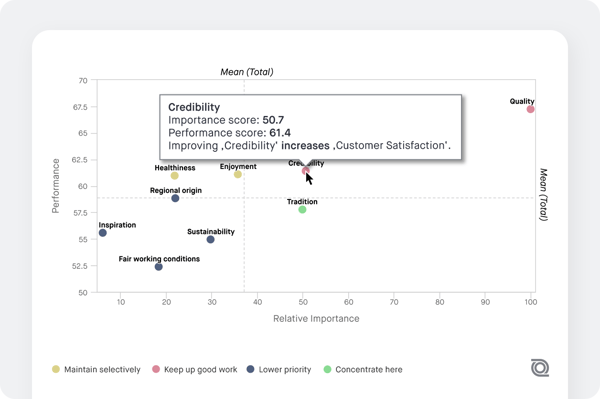
What levers are most effective for improving customer satisfaction?

KDA chart screenshot

The most effective drivers of the supermarket's customer satisfaction are 'credibility', 'quality', and 'tradition'.
 

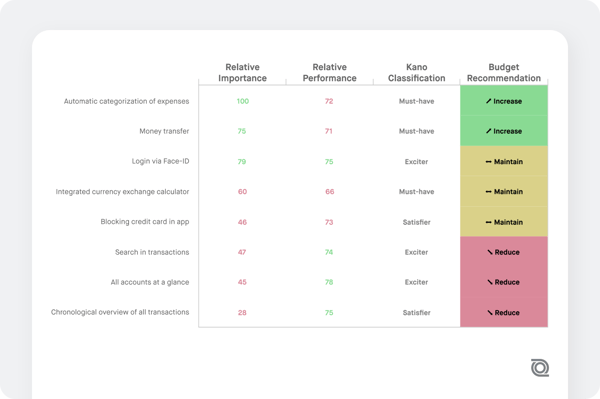
What product features will allow me to increase the willingness to buy?

KDA chart screenshot

'Automatic categorization of expenses,' 'Login via Face-ID,' and 'Money transfer' are the most important features impacting purchase intent.

Without quantilope, we wouldn‘t have been able to provide our internal
customers with what they need to run their business successfully
- neither in terms of insights nor time
.”


-Hermann Hausenbiegl, Head of Customer Insights & Analytics

Zurich logo


Frequently Asked Questions (FAQs):

What is Key Driver Analysis in market research?

Key Driver Analysis (KDA) is a statistical technique that identifies which factors (such as product features or brand attributes) have the greatest impact on a specific outcome like customer satisfaction or purchase intent.

What can Key Driver Analysis reveal about customer behavior?

KDA uncovers hidden relationships between variables and outcomes, highlights demographic-specific motivations, and provides clear prioritization recommendations through easy-to-understand visualizations.


How to run Key Driver Analysis?

Key Driver Analysis involves measuring how various features or characteristics impact a specific outcome like purchase intent or customer satisfaction, then prioritizing which levers to improve based on their relative importance.

quantilope automates this process through a drag-and-drop interface that generates real-time results and visualizations. Platform users can integrate KDA with other advanced methods like MaxDiff, TURF, and Price Sensitivity Meter for comprehensive research.


Which levers improve customer satisfaction most effectively?

Key Driver Analysis identifies which specific attributes drive satisfaction by measuring their relative impact on overall ratings. For example, a supermarket study might find that credibility, quality, and tradition are the most effective drivers of customer satisfaction among all measured attributes. This tells the supermarket where to focus their efforts. 


Why is KDA more accurate than simply asking customers what they value?

Customers often struggle to articulate their true motivations (stated importance), whereas KDA reveals derived importance, showing what actually correlates with their behavior regardless of what they claim.

How does KDA's "Importance-Performance Matrix" help with strategy?

This quadrant map plots attributes based on how much they "drive" the score versus how well the brand is currently performing, instantly highlighting "Key Vulnerabilities" (high importance/low performance) and "Maintenance" areas.

Request an automated Key Driver demo