


Skip to content

Automated Total Unduplicated Reach and Frequency (TURF)

TURF is used to identify the potential performance of a combination of products, features, or marketing actions. TURF analysis will identify which portfolio of items appeals to the greatest number of consumers.

quantilope's TURF is fully automated, allowing users to drag and drop the method into their survey instantly and follow along with results in real-time. 

Man on iPad doing research

Benefits of quantilope's automated TURF

Benefits of TURF icon 1

Easily identify which portfolio of items appeals to the greatest number of consumers

Benefits of TURF icon 2
Provides several options for brands to consider rather than one set-in-stone metric
Benefits of TURF icon 3
Efficiently allocates marketing budget to the most effective channels

Applications of automated quantilope's TURF 

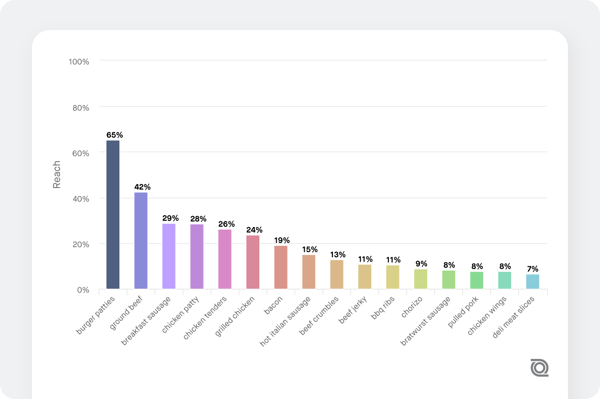
Which of my new products reaches the most number consumers?

TURF chart screenshot

Burger patties have the greatest single reach, reaching 65% of the consumers, followed by ground beef (42%) and breakfast sausage (29%).
 

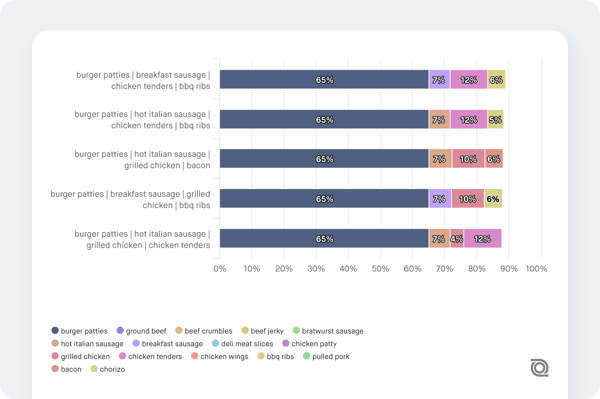
Which portfolio of new products has the highest market coverage?

TURF chart screenshot

To reach 90% of consumers, the manufacturer should produce burger patties, breakfast sausages, chicken tenders, and bbq ribs. These four product types have the greatest combined reach.

“With quantilope, OMD completes campaign testing in 24-48 hours to quickly identify the best advertising & media assets for optimal campaign success.”

-Klaus Stinnertz, Managing Director at OMD (Germany)

OMD logo

What does TURF stand for in marketing?

TURF stands for Total Unduplicated Reach and Frequency, a market research tool that finds the optimal mix of products, features, or media placements to maximize audience reach while minimizing overlap.


What is the difference between MaxDiff and TURF analysis?

MaxDiff measures the relative importance of individual attributes or features, while TURF identifies which combination of products or features reaches the most consumers without duplicating efforts (i.e., reaching the same consumers). 

How do you calculate TURF analysis in market research?

TURF creates a matrix of all possible product combinations, calculates the unduplicated reach and frequency for each, then identifies which combination provides the highest total reach. Like all advanced methods on quantilope's platform, this calculation is entirely automated. 

When should I use TURF analysis in market research?

Use TURF (Total Unduplicated Reach and Frequency) analysis when you need to select the optimal "portfolio" of products or messages that will reach the largest possible number of unique customers. It is most effective when you have limited resources — like shelf space or an advertising budget — and want to avoid redundancy by not targeting the same people twice with similar offerings.

What kind of charts does TURF analysis produce?

TURF analysis typically produces reach curves (showing how each added item increases the total percentage of the audience reached) and optimal bundle tables that rank various combinations of products by their efficiency. It also frequently uses bar charts to compare the "incremental reach" contributed by each specific item in a set.

How can I explain TURF analysis to a stakeholder?

Think of TURF analysis in the context of a wedding playlist. If you just pick the 10 most popular songs in the country, you might end up with all pop songs. While those are popular, the same group of "pop song lovers" will dance to all 10, while the jazz, country, and rock fans sit at their tables the whole night. TURF analysis will make sure you have an optimal mix that appeals to a broader audience — catering to the maximum number of people with at least one song. 

Request an automated TURF demo