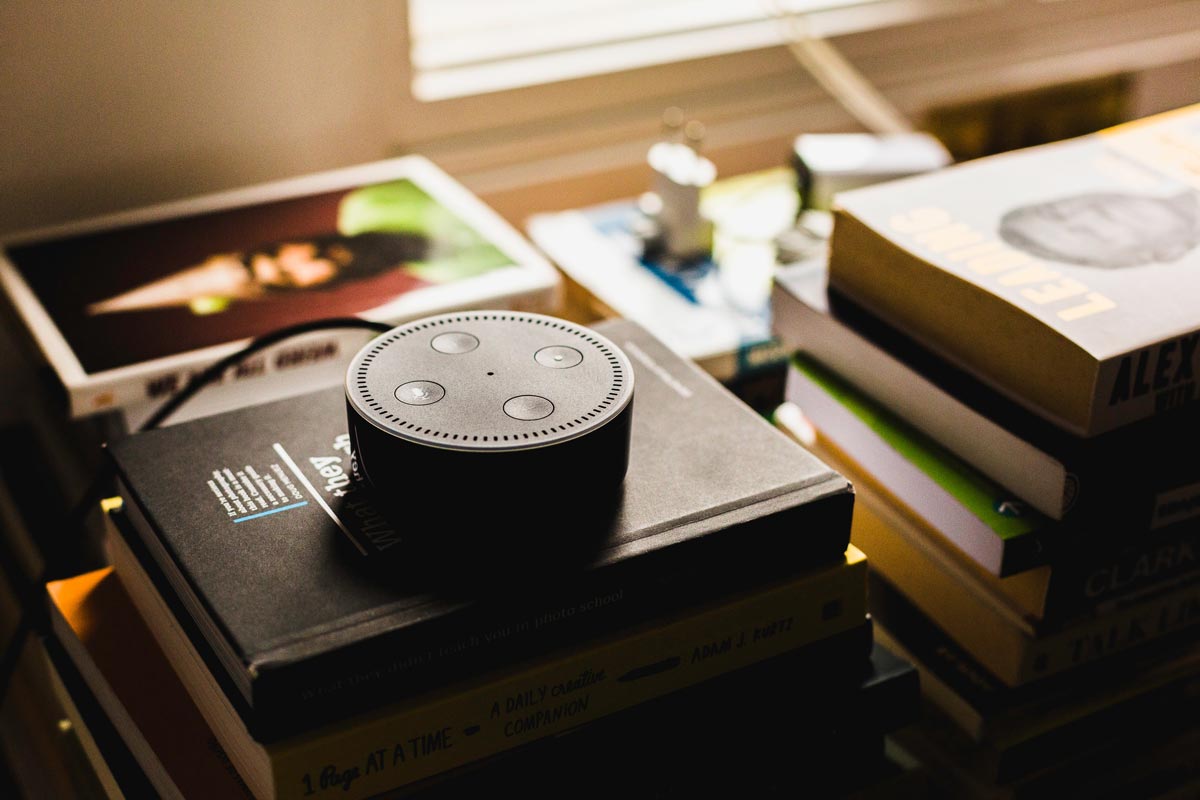
As we discussed in our last blog post, consumers are mostly using smart speakers to listen to music and for access to knowledge, not for shopping. But what are their concerns and feelings towards a device that is always on call, listening, and waiting for their next command to be answered? To find out, we ran a Single Implicit Association Test with over 400 US consumers to uncover subconscious associations to the category and their motivation for use.
To interpret the results, we looked at the implicit association strength (IAS) to measure how strongly consumers associate certain characteristics and attributes towards a specific category. The IAS in percentage shows how frequently an item was deemed to fit with the category (weighted by reaction time). With an IAS of over 80 percent, consumers firmly associate ‘joy’ as an emotional motivator for using devices like Amazon’s Alexa or Google Home. Following joy, the highest motivators include ‘freedom’ and ‘trust’. Interestingly enough, US consumers do not associate smart speakers with being ‘creepy’ or ‘invasive’ with each with an IAS of just 29 percent and 19 percent, respectfully.
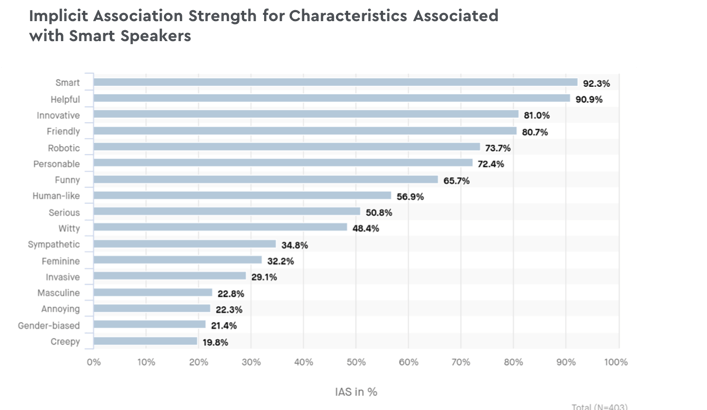
However, these numbers were put to the test when consumers were then asked about their reasons against using smart speakers. Both fears that the devices were constantly listening in on their conversations and overall privacy concerns had an IAS in the sixties. These reasons were followed by government listening and the threat of being hacked, at around 37 and 30 percent IAS each.
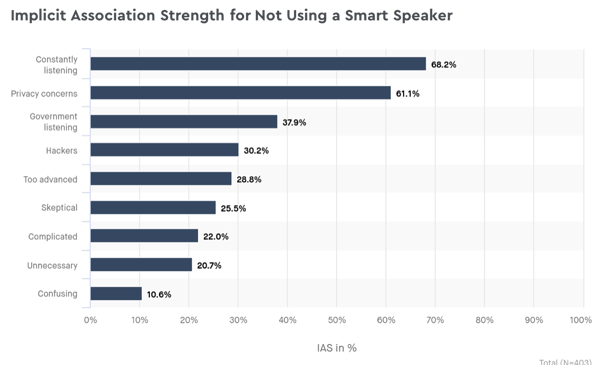
Evidently, US consumer’s reasoning behind using smart speakers versus how they feel about them do not align. This misalignment continues when we take another look at the emotional associations towards smart speakers, where ‘trust’ earned a 69 percent IAS score. From this, we can interpret that consumers may be aware of the privacy concerns with using smart speakers but might not care enough to adjust their usage.
When taking a look at the breakdown in age groups, Generation Z/Millennials were more likely to associate smart speakers with being creepy than Generation X. However, they were less likely to associate them with privacy concerns than Generation X.